Use this page to determine whether an elevator control system can operate the existing machine, drive, doors, safety circuits, fixtures, and floor logic without creating a wider modernization problem.
Send Your Control System Requirements
A control cabinet can be physically installed and electrically powered while the elevator still cannot run correctly.
The first failure is motor and drive mismatch. The controller must coordinate the traction machine or hydraulic power unit with the drive architecture, feedback device, brake logic, speed profile, leveling sequence, and stopping accuracy. Replacing the controller without confirming the inverter, motor type, encoder, brake voltage, and feedback signals can turn a control replacement into a machine-and-drive modernization.
The second failure is field-interface mismatch. Elevator controllers exchange information with car operating panels, landing calls, door operators, position sensors, safety circuits, inspection controls, limit devices, load-weighing systems, displays, emergency functions, and other building interfaces. A controller with the correct number of floors can still be wrong if its I/O architecture, communication network, voltage levels, connectors, or signal logic differ from the retained equipment.
The third failure is software and revision mismatch. Modern elevator control depends on parameters, firmware, application software, and sometimes proprietary communication. Two similar boards may not be interchangeable if the software version, hardware revision, protocol, or parameter set differs.
The buyer’s real decision is whether the proposed controller can manage the complete retained elevator. If several connected systems also need replacement, the job is a coordinated modernization rather than a cabinet swap.
A useful control-system specification starts by separating the functions that are often grouped under the word “controller.”
ASME A17.5-2025 applies to elevator and escalator electrical equipment and explicitly includes motor controllers, motion controllers, operation controllers, operating devices, and other electrical equipment within its scope. Those functions may be integrated into one cabinet or distributed across several devices, but the distinction matters when a buyer compares systems.
The motion-control function manages position, speed feedback, acceleration, deceleration, leveling, terminal stopping, and permission to move.
The motor-control function manages power to the driving machine and coordinates with the inverter or hydraulic power unit.
The operation-control function handles calls and operating modes, including dispatching, door timing, inspection, emergency functions, access control, and other defined project logic.
Safety-related electrical functions must be treated separately from ordinary convenience logic. ISO 22201-1:2017 addresses programmable electronic systems used in safety-related applications for lifts, known as PESSRAL. It uses safety integrity levels for defined safety functions and requires the programmable system to be considered within the referenced lift-code framework. That is why a generic PLC or industrial controller cannot be assumed to be an acceptable substitute for a lift safety controller simply because it can reproduce the sequence.
Verification Fields: Verification fields include supply voltage, cabinet dimensions, I/O count, communication buses, board revisions, terminal assignments, controller software, parameter files, diagnostic tools, wiring drawings, environmental requirements, and documentation.
Compare control systems in this order: first the elevator architecture and retained equipment, second the safety and motion interfaces, third the communications and software environment, and only then secondary operating features.
A control-system enquiry should reconstruct everything the controller has to command, monitor, or communicate with.
Start with the elevator type, rated load, rated speed, travel, number of stops, entrance arrangement, machine type, drive type, brake, and feedback device. These fields establish the movement architecture.
Then map the doors. Record the door operator, entrance count, front or rear openings, door-zone signals, safety edges or light curtains, open and close limits, nudging or other operating logic where applicable, and the voltage or communication interface used by the door equipment.
Next map the position system and safety chain, including car position, terminal zones, door locking, inspection state, emergency conditions, and other required safety devices. If programmable electronics perform a safety function, the safety integrity and validation basis must be understood.
Then record operating devices, access-control or emergency interfaces, power supply, cabinet location, retained wiring, and any required data interfaces.
For an existing elevator, photographs are useful but wiring diagrams and controller records are more valuable. Final I/O, software, drive parameters, safety configuration, and communication interfaces must be confirmed for the actual installation.
For a new elevator, the controller can be selected together with the machine, inverter, encoder, doors, fixtures, and safety equipment. This reduces the number of legacy interfaces that need to be preserved.
The decision driver is still system integration. A buyer should not create a preferred-brand list for the controller, inverter, traction machine, door operator, and fixtures independently and assume that the selected brands will communicate without additional engineering.
The controller should be defined from the complete elevator duty and operating concept. Floors, doors, travel, speed, machine architecture, dispatching, accessibility functions, service modes, and destination-market requirements all influence the control package.
JAFITA’s current product scope spans multiple elevator categories, while its company materials describe a coordinated multi-brand model built on freight-elevator manufacturing and OEM work. That makes system coordination more relevant than one universal controller family.
The current supplier materials do not publish a standalone JAFITA control-system model range. New-project controller selection should therefore remain part of the approved complete-elevator configuration.
Modernization is more difficult because the new controller has to communicate with equipment designed under an older architecture.
The project should begin by separating retained and replaced systems. If the traction machine remains, document the motor, brake, encoder, sheave, and existing drive relationship. If the doors remain, document the door operator, door sensors, limits, voltage, and interface. If the COP and LOP remain, document button wiring, displays, communication boards, indicators, and call logic.
A controller replacement can reveal hidden dependencies. An old position system may not provide the feedback required by the new control architecture. Existing fixtures may use a proprietary serial network. A door operator may need a different command interface. A retained inverter may not support the new motion-control method.
If the controller requires new fixtures, door boards, encoder, inverter, wiring, or safety devices, those changes should be declared before approval. The correct modernization scope is the smallest technically coherent system, not necessarily the fewest parts.
Freight elevators often need operating logic that reflects the way goods move through the building.
The control system may need to coordinate large doors, through-car entrances, loading sequences, independent service, restricted floor access, car or landing controls, and the operating pattern created by material handling. The exact functions depend on the project and should not be inferred from the label “freight elevator.”
JAFITA’s supplier evidence is strongest in freight elevators. The company identifies freight-elevator production as a core strength and states that it has provided OEM services for multiple brands. Uploaded materials name KONE and ThyssenKrupp in that OEM history.
The freight-elevator presentation also identifies a Safety Door Operator and Door Light Curtain, both relevant to control coordination. The same supplier record includes one-million-cycle door-operator verification in the freight-elevator context, but that test is not a controller-life claim.
JAFITA’s freight background supports discussion of complete freight-elevator control coordination. It does not establish a published standalone controller series or fixed list of freight-control functions.
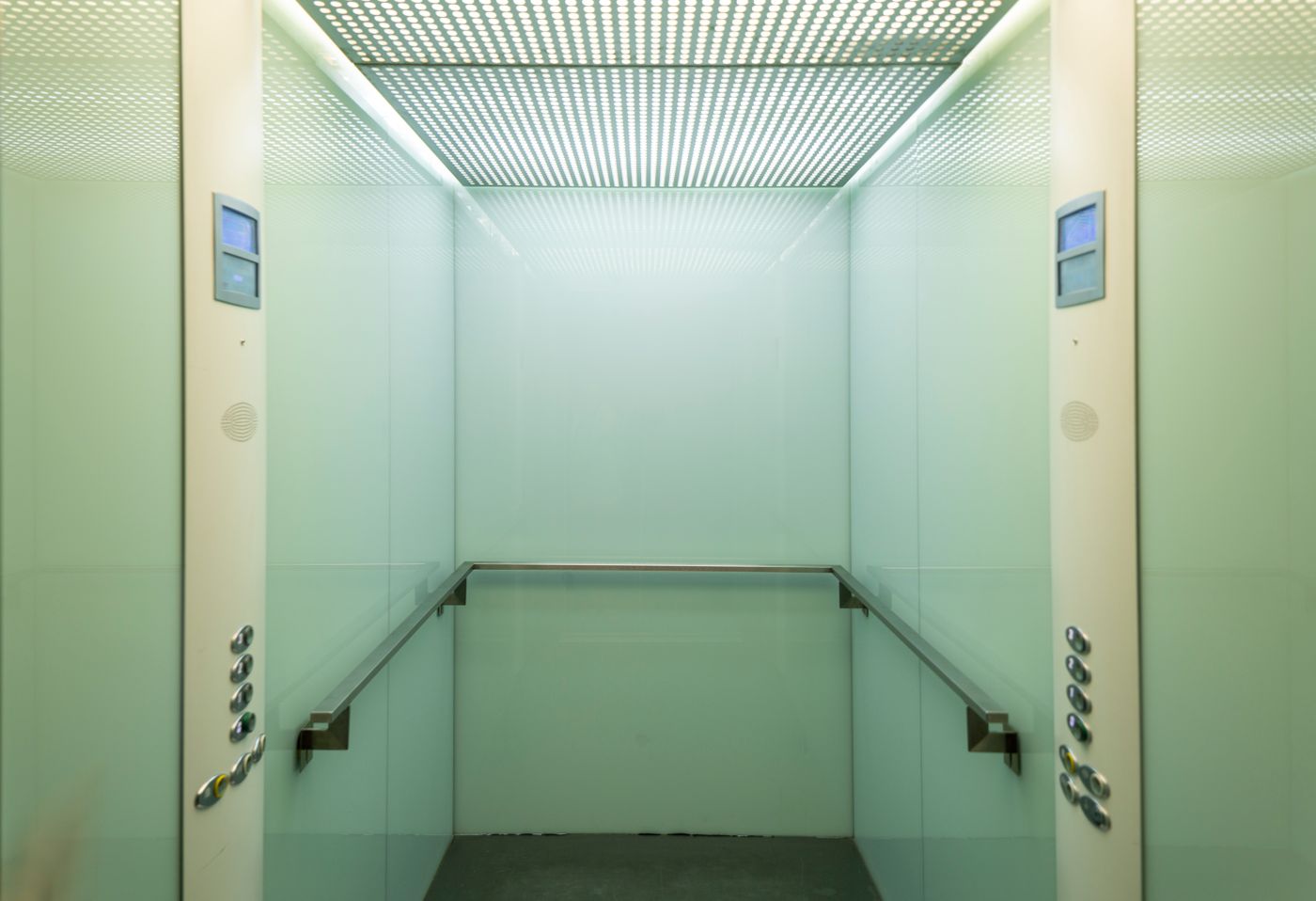
JAFITA’s Home Elevator presentation specifically identifies an Intelligent Control System as part of that product category. This is one of the few direct control-system statements in the current supplier materials.
That fact should not be expanded into claims about remote apps, IoT, destination control, voice operation, cloud monitoring, or communication protocols. The brochure does not publish the hardware model, software architecture, interfaces, or function list.
For a home-elevator project, the control decision begins with the actual product category, number of stops, entrances, drive architecture, user requirements, emergency operation, accessibility needs, and local code. Control-panel appearance and smart-home integration are secondary unless the selected controller explicitly supports them.
Where a home elevator is being replaced or modernized, the supplier should also identify how the existing doors, fixtures, drive, safety chain, and power supply will interface with the proposed control system.
When several elevators operate as a group, the controller has to manage more than one car’s local movement.
The group system receives landing demand, tracks car position and direction, and applies dispatching logic to decide which car should answer each call. The useful performance depends on the building population, traffic pattern, number of cars, car capacity, speed, floor arrangement, and operating strategy.
The buyer should distinguish group control from a basic parallel connection between separate elevators. Group-control functions may include zoning, peak-traffic strategies, parking logic, service isolation, priority modes, and interfaces with access-control or destination systems where supported.
Mixed generations create additional difficulty because a new group controller may need gateways, interface boards, software changes, or replacement of older local controllers.
JAFITA’s current materials do not publish a group-control product, algorithm, maximum car count, destination-dispatch function, or protocol. These features must remain project-specific.
| Capability | Supplier evidence |
|---|---|
| Freight-elevator manufacturing foundation | JAFITA identifies freight elevator production as a core company strength. |
| OEM control context | Company materials state that JAFITA has provided OEM elevator services for multiple brands. |
| Named OEM history | KONE and ThyssenKrupp are named in JAFITA’s long-term OEM history. |
| Factory-resource network | Company materials describe direct factory relationships developed through cooperation, including Hitachi and XIO LIFT. |
| Home Elevator control | Current Home Elevator presentation identifies an Intelligent Control System. |
| Freight door-control interface | Freight-elevator materials identify a Safety Door Operator and Door Light Curtain. |
| Passenger project scope | Current brochure presents Passenger Elevator and High-Speed Elevator categories requiring project-specific control coordination. |
| Freight project scope | Current brochure presents Freight Elevator, Industrial Elevator, and Car Elevator categories. |
| International business | JAFITA has been engaged in elevator export business since 2008. |
| Engineering support | Company brochure presents an Engineering Service Team. |
| Lifecycle support | Company brochure presents lifecycle service support. |
| Company qualifications | Company portfolio presents a Special Equipment Production License and ISO 9001, ISO 14001, and ISO 45001 management-system certifications. |
The current evidence supports JAFITA’s complete-elevator and control-integration context more strongly than a standalone control-product catalogue. Controller models, I/O capacity, communications, drive compatibility, software features, and certification should be added only from actual supplier datasheets.
For an existing elevator, send the controller manufacturer and model, complete cabinet photographs, board model and revision labels, wiring diagrams, elevator manufacturer and model, number of stops, front and rear entrances, machine type, motor data, inverter model, encoder, brake data, door-operator model, COP and LOP information, and photographs of relevant interfaces.
Also provide the fault description, alarms, inspection-mode status, and components already tested or replaced.
If a board rather than the complete controller is required, photograph the entire board, labels, connectors, and removable memory or communication modules. Keep the failed board until commissioning is complete.
For a modernization project, state which systems must remain and which can be replaced. This allows JAFITA to determine whether the requirement is a controller replacement, control-and-drive package, door-and-control package, or broader modernization.
For a new project, send the elevator specification, destination market, operating modes, access-control requirements, group requirements where applicable, and documentation expectations.
A control system is more difficult to reproduce than a simple mechanical part because the hardware is only part of the delivered configuration.
The project record should preserve controller model, board revisions, software or firmware version, parameter files, drive settings where applicable, I/O maps, wiring drawings, communication configuration, password or access arrangements where contractually permitted, and the equipment models connected to the controller.
This information matters because a physically identical board may still fail to restore operation if the correct software or parameter set is missing.
JAFITA’s OEM background, Engineering Service Team, and lifecycle support provide a basis for project coordination. Controller backup procedures, source-code access, software ownership, remote monitoring, and spare-board inventory must be confirmed for the selected system.
Company management-system certifications support company qualification. They do not replace product-specific electrical or functional-safety certification.
Price depends on the controller architecture, number of floors and entrances, machine and drive interfaces, I/O requirements, operating modes, communication, fixtures, safety functions, modernization scope, quantity, documentation, and destination market. A cabinet price alone may exclude interface work required by retained equipment.
Sometimes, but only if the new controller can correctly command the retained drive and use its feedback, safety, and communication interfaces. The inverter model, motor, encoder, braking arrangement, and communication method should be checked before the controller is selected.
A photograph can support identification but is not enough for approval. Send the board model, revision, controller model, software or firmware information, connectors, elevator configuration, and fault description.
ASME A17.5-2025 applies to elevator and escalator electrical equipment and includes motor controllers, motion controllers, operation controllers, operating devices, and other electrical equipment within its stated scope. It is used with the wider ASME A17 code framework in North American jurisdictions.
PESSRAL means a programmable electronic system used in a safety-related application for lifts. ISO 22201-1:2017 addresses these systems and uses safety integrity levels for defined safety functions. A normal programmable controller should not be assumed to satisfy PESSRAL requirements unless the relevant design and validation basis supports it.
The current supplier materials do not provide a standalone controller model list. They confirm an Intelligent Control System for the Home Elevator category and broader elevator-system supply, but model-level controller data must be confirmed per project.
No universal control-system MOQ is stated in the current supplier materials. Quantity, controller source, project type, customization, replacement versus new-project scope, and documentation requirements affect the commercial structure.
Controller model, hardware revision, software preparation, project engineering, quantity, interface confirmation, documentation, destination, and shipping method can affect schedule. A modernization order may also depend on receiving complete existing-equipment data before the configuration can be frozen.
Possibly, but the operating fixtures must match the new controller’s voltage, wiring, communication protocol, button logic, displays, indicators, and special functions. Proprietary serial fixtures can make reuse more difficult than simple discrete-wired devices.
JAFITA’s materials present Engineering Service Team and lifecycle support but do not establish a universal overseas commissioning or installation commitment. Programming, site commissioning, inspection, local technician work, and remote support should be defined for the actual project.
A control-system page should not imply that any elevator can be modernized by replacing one cabinet.
The controller coordinates motion, doors, calls, safety circuits, fixtures, drive equipment, feedback devices, and operating modes. Changing it can require changes to several connected systems, especially where old equipment uses proprietary communication or obsolete hardware.
Safety-related programmable electronics need particular care. ISO 22201-1:2017 addresses PESSRAL design and safety integrity for lift safety functions, while ASME A17.5-2025 provides electrical-equipment requirements for controllers and related equipment in North American applications. Local code and product certification remain project-specific.
JAFITA’s current supplier evidence supports freight-elevator manufacturing, OEM history, an Intelligent Control System in the Home Elevator presentation, door-system interfaces in freight elevators, international business, and engineering support. It does not yet support a universal standalone controller range.
The correct replacement or modernization begins with a complete equipment map and ends with a controlled software, hardware, and parameter record.
