



01 · Heavy Duty Engineering
Freight Elevators
Specify freight elevators around the real load, handling equipment, floor loading, door geometry, duty cycle, and building interfaces before rated capacity becomes a misleading shortcut.
02 · Physics-Based Engineering
Freight elevator failures start when the payload is described only in kilograms
A freight elevator can meet its stated rated load and still be wrong for the job. The problem usually appears when the buyer gives only one number, such as the mass of a pallet, machine, or goods batch, while the engineering discussion omits how that mass reaches the car floor.
A pallet moved by a manual pallet truck, the same pallet carried by a powered forklift, and a machine standing on four small feet can have identical total mass but create very different loading conditions. Wheel loads, axle loads, contact area, center of gravity, braking, turning, and repeated sill crossings change the forces seen by the car floor, platform, frame, entrance, and supporting structure. A nominal capacity check alone does not resolve those differences.
Door geometry creates a second failure mode. Goods may fit inside the car but still be difficult to load because the clear opening is too narrow, the door height is insufficient, or the approach does not allow the handling equipment to enter squarely. In a warehouse or factory, every extra maneuver becomes part of the cycle time. A poor entrance layout can reduce useful throughput even when elevator travel speed is adequate.
Duty creates a third failure mode. Moving a maintenance item twice a day is not the same duty as transferring pallets every few minutes across multiple shifts. Discovering that difference after design freeze can force structural, door, control, or operating changes. Freight elevator selection therefore begins with the complete load case, not the rated-load number.
03 · Mechanical Evaluation Hierarchy
Freight elevator specifications must describe how the load reaches the car floor
Rated load is a primary selection field, but it must be read together with load distribution. A uniformly spread load and a concentrated wheel or point load can place different demands on the car floor and supporting structure. For industrial projects, the buyer should describe the support footprint, wheel arrangement, axle loading, center of gravity, and any handling device that travels with the goods.
ISO 4190-2 Class IV Standard
The current ISO dimensional planning reference for Class IV freight lifts, ISO 4190-2:2001, remains current after confirmation in 2025. It distinguishes between passenger-and-goods loading and goods-only loading with different floor-loading treatment where local safety codes permit it. That distinction matters because two lifts with the same nominal rated load can be designed around different loading assumptions.
Car Envelope & Clear Height
Car width, depth, and clear height are also selection-driving fields. The usable envelope must fit the largest recurring load in its transport condition, including packaging, guards, lifting eyes, pallets, carts, or temporary supports. The car must also leave enough room for the operator or handling method where the applicable operating procedure requires it.
Clear Opening & Through-Car
Clear door opening often controls usability more than the car volume. Door width and height should be checked against the actual load envelope and the approach path. A through-car arrangement can reduce reversing and shorten material flow, but it changes the shaft, landing openings, and circulation layout.
Operating Duty & Environment
Travel, stops, and rated speed determine only the vertical portion of the trip. Door opening, loading, unloading, and queueing can dominate throughput. Record loaded trips, operating hours, peak periods, and environmental conditions such as dust, moisture, corrosive exposure, temperature, or outdoor use.
Verification fields come later. Drive arrangement, controller, door operator, safety devices, electrical supply, finishes, and documentation verify how the selected freight configuration will be built. Compare suppliers in this order: actual load case first, car and entrance geometry second, duty and building interfaces third, and component configuration last.
Compare suppliers in this order: actual load case first, car and entrance geometry second, duty and building interfaces third, and component configuration last.
04 · Engineering Sizing Principle
Freight elevator sizing starts with the heaviest recurring transport unit
The sizing load is not simply the heaviest product stored in the building. It is the heaviest complete transport unit that the elevator must carry under normal operating rules.
Combined Vehicle & Payload Weight
If goods move on a pallet truck, include the pallet, goods, and truck where the truck enters the car. If a forklift enters, include the truck, payload, and operator where applicable, then check wheel loads and clearance separately. OSHA’s U.S. guidance for powered industrial trucks using elevators specifically calls for the elevator to have capacity for the combined truck-and-load weight, with adequate overhead clearance and space for the truck and operator.
Envelope Sizing & Shift Cycles
Size geometry from the transport condition as well. Record maximum length, width, height, wheelbase or caster spacing, door opening, approach path, peak loaded trips, and shift pattern. Final values must be confirmed for the actual project, applicable code, and selected JAFITA configuration.
05 · Application Engineering Blueprints
Sector-Specific Loading Dynamics & Material Flows
Technical requirements, material flow discipline, and floor stress factors analyzed across six core industrial freight applications.
 FL-01 · Pallet & Logistics
Pallet freight elevators depend on the handling device as much as the pallet
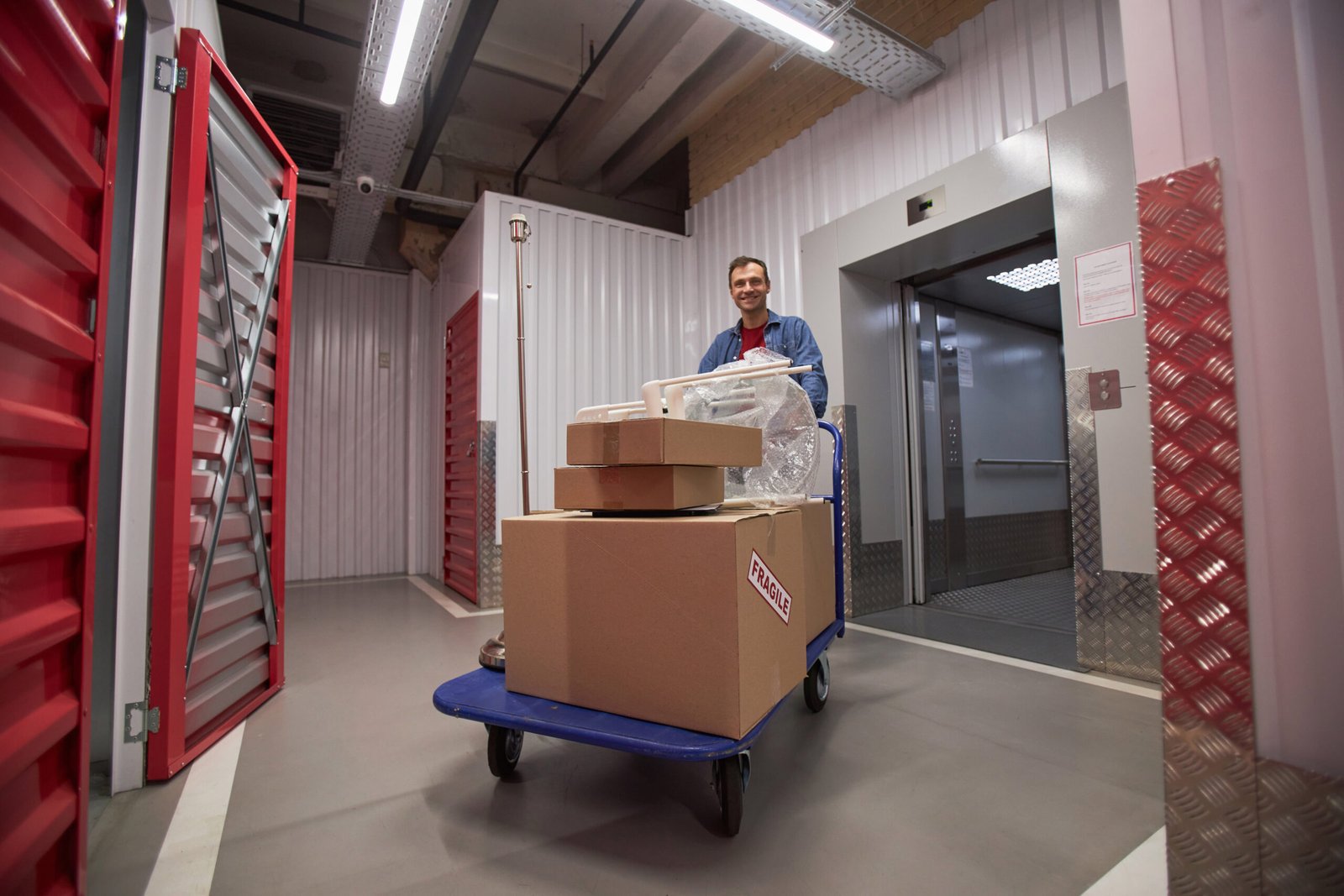
A standard pallet dimension is not enough to size the elevator. The project must define whether the pallet is moved by hand pallet truck, powered walkie, stacker, reach truck, or another device. Each changes the total mass, turning space, wheel loading, and approach geometry. Powered handling equipment adds vehicle mass, wheel loading, and maneuvering space. A forklift that only places a pallet at the threshold creates a different elevator load case from one that drives fully into the car.
 FL-02 · Factory Process Duty
Factory freight elevators depend on production continuity and repeated cycles
In a factory, the elevator may become part of the process rather than an occasional building service. A delay can stop material at one floor while downstream operations wait for it elsewhere. Define peak trips by shift and whether loads arrive steadily or in batches. Door time, loading time, and queueing can matter more than rated speed. Repeated carts, molds, dies, coils, bins, and fixtures should be checked by their actual contact pattern on the car floor.
 FL-03 · Heavy Machinery & Dies
Machinery freight elevators depend on support points and transport condition
Heavy machinery can remain below the rated load while creating demanding point loads. Machine feet, steel skids, rollers, or transport dollies concentrate force into small areas. Record the support geometry and center of gravity before selecting the car floor and structure. If temporary steel plates or load-spreading devices will be used, they should be included in the operating method rather than introduced informally after delivery.
 FL-04 · Automotive & Parking
Vehicle freight elevators depend on axle loading and approach geometry
A vehicle elevator cannot be specified from gross vehicle mass alone. Wheelbase, track width, axle loading, tire contact, overhang, turning radius, overall height, and approach angle determine whether the vehicle can enter, stand, and leave the car. The approach lane is part of the equipment decision. A car can be wide enough while the driver still cannot align with the entrance because the turn is too tight.
 FL-05 · Directional Material Flow
Through-car freight elevators depend on material-flow direction
Front-and-rear entrances can reduce reversing, shorten handling time, and separate incoming from outgoing material. That can be useful in warehouses, food service, manufacturing, and logistics operations. A through-car arrangement affects landing openings, shaft construction, door equipment, controls, and floor layout. Map the complete route first; if the load still makes a tight turn outside a landing, two entrances may not solve the actual bottleneck.
 FL-06 · Code Classification
Mixed goods and personnel require the code category to be established first
Some projects use the term “freight elevator” for equipment that carries goods with an attendant or other authorized people. Others mean goods-only equipment. Those are not interchangeable descriptions. ISO 8100-1:2026 covers lifts intended for persons or persons and goods within its stated scope. ISO 4190-2 also distinguishes dimensional planning for Class IV freight lifts with different loading treatments. North American projects commonly use ASME A17.1/CSA B44.
06 · Supplier Capability Audit
JAFITA Freight Elevator Capability Shown in Current Supplier Materials
Auditable documentation and manufacturing history representing JAFITA’s core freight elevator foundation.
| Capability Dimension | Supplier Evidence in Current Materials | Buyer Implication |
|---|---|---|
| Freight elevator manufacturing | JAFITA identifies freight elevator production as a core company strength. | Freight projects are tied to the company’s stated manufacturing base rather than only external product sourcing. |
| OEM freight production | Company materials state that JAFITA has provided OEM service for multiple elevator brands, including KONE and ThyssenKrupp. | OEM manufacturing is part of the company’s established freight-elevator business history. |
| Freight Elevator category | Freight Elevator is presented as a main category in the current brochure. | General goods-handling projects are within the represented product scope. |
| Industrial Elevator category | Industrial Elevator is listed as a related freight product direction. | Factory and more demanding industrial duties can be separated from ordinary goods movement during enquiry. |
| Car Elevator category | Car Elevator appears in the current freight product range. | Vehicle-moving projects can be routed to a dedicated configuration rather than treated as ordinary pallet freight. |
| Door operator evidence | The brochure states that the freight-elevator safety door operator has undergone one-million-cycle operation verification. | Door durability is an explicit supplier claim that buyers can request supporting test evidence for during qualification. |
| Structural product theme | The brochure presents a high-strength structure for freight elevators. | Structural requirements are explicitly emphasized in JAFITA’s freight product material, while project-specific loading limits still require confirmation. |
| Entrance protection | The brochure presents a door light-curtain system intended to protect goods and personnel at the entrance. | Entrance detection is part of the represented freight configuration and should be confirmed for the selected unit. |
| Export activity | JAFITA has been active in elevator export business since 2008. | Overseas freight projects can be coordinated within an established export operation. |
| Engineering and lifecycle support | The brochure presents an engineering service team and lifecycle service support. | Technical coordination and later service support are represented supplier capabilities, subject to the agreed project scope. |
07 · Technical Enquiry Protocol
Freight elevator enquiries should freeze the load case before the model
A useful freight enquiry starts with the load, not the requested model name.
Send the project country, building use, quantity, served floors, travel, and a description of the heaviest recurring goods movement.
Describe total payload, dimensions, support footprint, wheel or point loads where known, and the handling device. State whether a pallet truck, forklift, or vehicle enters the car and whether the loading method changes by floor.
Next provide the building interfaces. Hoistway width and depth, pit, overhead, landing openings, approach paths, machine-space conditions, and electrical supply determine whether the intended configuration fits the project. State whether one or two entrances are required and whether the load must pass straight through.
JAFITA can then determine whether the enquiry fits its Freight Elevator, Industrial Elevator, Car Elevator, or another represented product direction. Before design freeze, confirm the load case, floor loading, car and door geometry, control configuration, code basis, drawings, inspection requirements, documentation, and installation responsibilities.
08 · Manufacturing Transparency
Freight elevator supply consistency is strongest where JAFITA’s manufacturing role is explicit
Freight elevators are the product category in which JAFITA’s supplier identity is clearest.
Company materials describe freight elevator production as a core strength and state that JAFITA has provided OEM manufacturing for multiple brands, including KONE and ThyssenKrupp. The same materials say those projects contributed to continued improvement of internal management and supply-chain coordination.
The brochure adds product-level evidence: a safety door operator with one-million-cycle operation verification, a high-strength structural theme, and a door light-curtain system. Buyers should request the applicable evidence for the proposed configuration rather than assume every freight elevator uses an identical build.
At company level, the brochure shows a Special Equipment Production License and ISO 9001, ISO 14001, and ISO 45001 management-system certifications. These support supplier qualification; they are not product certificates for every destination market. JAFITA has exported elevators since 2008 and presents an engineering service team and lifecycle service support. For repeat orders, retain the approved load case, car and door dimensions, major components, drawings, and document revisions. Inspection and shipment documents should be agreed for the actual order.
09 · Technical & Commercial Clarifications
Frequently Asked Questions
Direct, auditable answers covering freight pricing variables, MOQs, forklift engineering, door sizing, and maintenance.
Freight elevator pricing depends on which load details?
Pricing depends on rated load, car size, door size and type, travel, stops, entrances, drive and control configuration, structural requirements, finishes, destination requirements, and order quantity. Forklift entry, concentrated loading, through-car arrangements, or vehicle use can change the technical scope and should be disclosed before quotations are compared.
Freight elevator MOQ is what for an export order?
The current JAFITA documents do not publish a universal minimum order quantity. Quantity, customization, OEM requirements, product category, and shipping arrangement can change the commercial terms, so MOQ should be confirmed for the specific project.
Freight elevator lead time begins after which confirmation?
No fixed freight-elevator lead time is stated in the supplied materials. A useful schedule should identify technical clarification, drawing approval, component and finish confirmation, production, inspection or documentation, packing, and shipment as separate stages.
Freight elevator forklift entry requires what information?
Provide the forklift model, truck mass, maximum payload, wheel or axle information where available, overall height, width, length, turning requirements, and whether the operator remains on the truck. The elevator capacity and floor design must be checked against the combined operating case, not the pallet weight alone.
Freight elevator door size should be based on pallet dimensions?
Not by itself. Use the largest recurring transport envelope, including packaging overhang, handling equipment, turning alignment, and any safety clearance required by the project. Door height also needs review for machinery, tall loads, and vehicle applications.
Freight elevator certifications should an overseas buyer request?
Start with the destination jurisdiction and the intended operating category, including whether people accompany the goods. JAFITA’s company license and ISO management-system certificates support supplier qualification, while product compliance and any local elevator certification must be confirmed for the selected configuration.
Freight elevator installation support includes what?
JAFITA’s brochure presents an engineering service team and lifecycle service support. The contract should define the actual scope for drawings, installation coordination, commissioning, site attendance, local inspection support, documentation, spare parts, and later technical assistance.
Freight elevator maintenance intervals are fixed for all applications?
No. Door cycles, loaded trips, operating hours, environment, handling impacts, and equipment configuration change the maintenance demand. A freight elevator used occasionally in a commercial building should not automatically follow the same operating assumptions as one embedded in a multi-shift factory process.

10 · Code Boundary & Next Action
Freight Elevator Scope Must Match the Load, Operating Rules, and Jurisdiction
This page covers freight, industrial, and related goods-handling applications represented in JAFITA’s current materials. It does not establish a universal JAFITA rated-load, speed, car-size, door-opening, floor-loading, pit, overhead, or duty-cycle range.
The project must distinguish lifts intended for persons and goods from goods-only equipment and from other material-handling devices. ISO 8100-1:2026 applies to passenger and goods-passenger lifts within its stated scope, while ISO 4190-2 provides dimensional planning for Class IV freight lifts and recognizes different loading treatments. North American projects may fall under ASME A17.1/CSA B44 and local adoption.
Construction hoists, mine lifts, lifting platforms, hazardous-location equipment, dangerous-goods transport, explosive atmospheres, severe outdoor exposure, seismic requirements, and other special applications require separate technical and regulatory review. JAFITA can configure a freight elevator only against the load case and site information provided for the project. Building structure, floor loading outside the elevator, material-handling procedures, local approvals, installation, and operating rules still require coordination with the responsible project professionals, facility team, and authorities.