Use this page to decide whether an elevator guide-rail system can match the car and counterweight arrangement, safety-gear interface, hoistway geometry, ride requirements, and retained equipment without creating an alignment or compatibility problem.
Send Your Guide Rail Requirements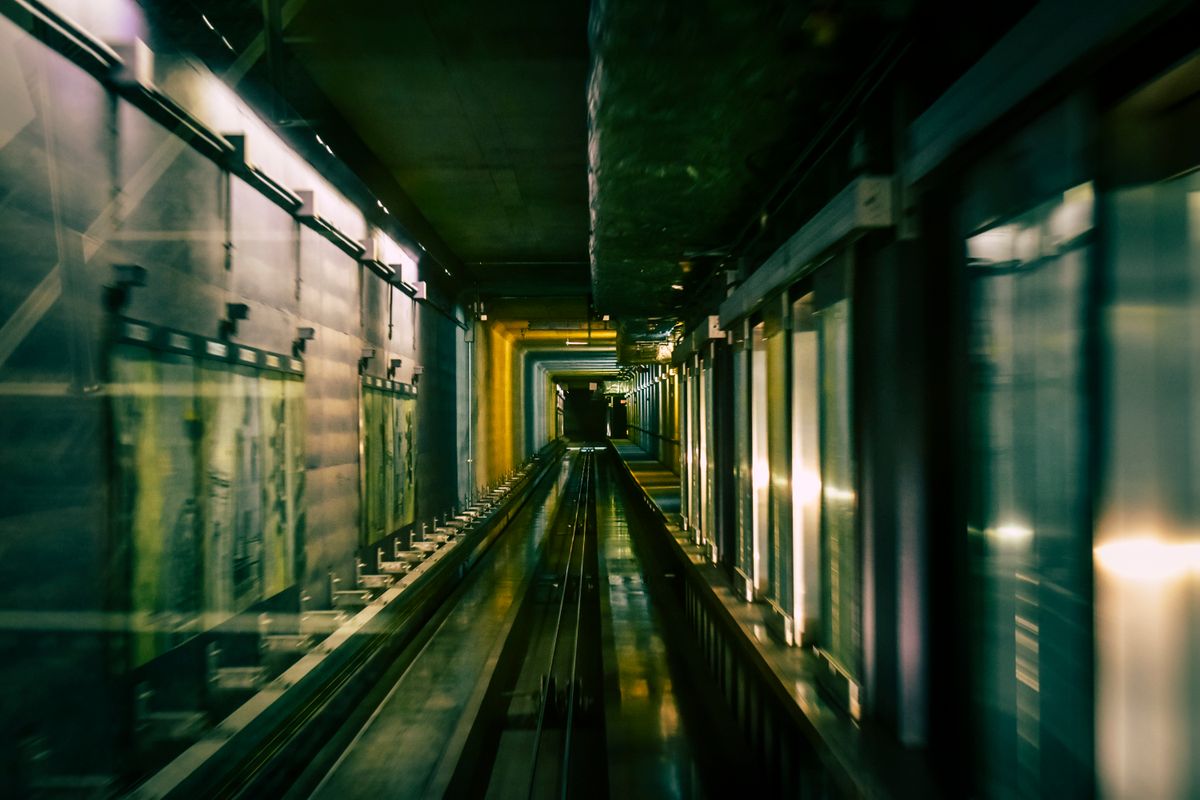
Guide rails look simple compared with controllers, drives, or door systems, but their function is system-critical. They define the guided path of the car and counterweight, provide the mechanical interface for guide shoes or rollers, and—where the selected elevator uses safety gear acting on the rails—form part of the stopping system.
That is why a rail should not be sourced from appearance alone.
Two rails can look similar while differing in section geometry, working-surface dimensions, machining, joint details, straightness, material specification, or compatibility with the existing brackets, clips, guide shoes, and safety gear. A replacement that is “close” in visible size can create alignment problems or make the retained safety and guide interfaces impossible to approve.
A second failure comes from treating car rails and counterweight rails as interchangeable procurement items. They belong to different moving assemblies and may have different design duties. The complete elevator calculation, guided mass, safety arrangement, load case, travel, speed, and hoistway determine what each rail system must do.
A third failure is installation geometry. Even the correct rail profile can perform poorly when rail joints, bracket positions, alignment, verticality, rail spacing, or support conditions are not controlled. Ride quality, guide-shoe wear, noise, vibration, and safety-device behavior can all be affected by the installed guide path.
For modernization, the buyer faces the opposite question: whether the existing rails are suitable to retain. Rail condition, profile, wear, alignment, bracket system, safety-gear compatibility, and the new car-frame or guide-shoe arrangement must be reviewed before a retained rail is treated as an approved interface.
JAFITA’s current supplier materials do not publish a standalone guide-rail model catalogue. The company’s strongest evidence remains its freight-elevator manufacturing and OEM foundation, together with broader multi-category supply, factory relationships, engineering support, and export activity. Guide-rail selection therefore needs to stay tied to the approved elevator configuration rather than being presented as a universal JAFITA rail series.
Guide-rail specifications should be divided into selection-driving fields and verification fields.
The selection-driving fields come first.
Elevator category and guided assembly establish whether the rail is intended for the car, counterweight, or another defined system. The car carries the cabin, doors, load, car frame, and associated equipment. The counterweight has a different mass distribution and frame arrangement. The correct rail selection depends on which assembly is being guided.
Rated load, car mass, and actual load case affect the forces transmitted through the frame and guide system. In passenger elevators, the load is usually distributed differently from freight applications. In freight elevators, machinery feet, pallet trucks, forklifts, vehicles, or offset loads can change structural reactions even when total mass remains within rated load.
Rated speed and travel influence the dynamic and alignment requirements of the complete guide system. Higher-speed or longer-travel projects demand closer attention to rail alignment, joints, guide interfaces, car dynamics, and the relationship between rails and the building. Speed alone, however, is not enough to select a rail.
Guide arrangement and spacing must match the car frame or counterweight frame. Rail positions, distance between guide lines, guide-shoe or roller locations, safety-gear mounting, and hoistway dimensions all need to correspond to the approved mechanical drawing.
Safety-gear interface is particularly important for car rails where the selected safety system acts on the guide rail. The rail profile, working surface, material basis, safety-gear model, operating direction, mounting, and complete verification context need to be compatible. ISO 8100-2:2026 explicitly includes both verification of safety gears and calculation of guide rails within its component design and verification scope.
Support and fastening system connects the guide rail to the building. Brackets, clips, fasteners, backing plates, inserts, beams, or other supports depend on the hoistway structure and elevator design. Bracket spacing cannot be assumed from an unrelated project because building support conditions and rail calculations can differ.
Verification Fields: Verification fields come after the rail system has been selected. These include exact rail profile, section dimensions, rail length, joint configuration, joint plates or fishplates where used, hole pattern, working-surface condition, machining, surface protection, bracket type, clip type, fastener details, guide-shoe interface, packaging identification, and drawing revision.
When comparing suppliers, check in this order: first the complete elevator and guided assembly; second the rail, safety, guide, and support interfaces; third the physical rail and accessory details. A matching nominal section is not sufficient if the system interfaces differ.
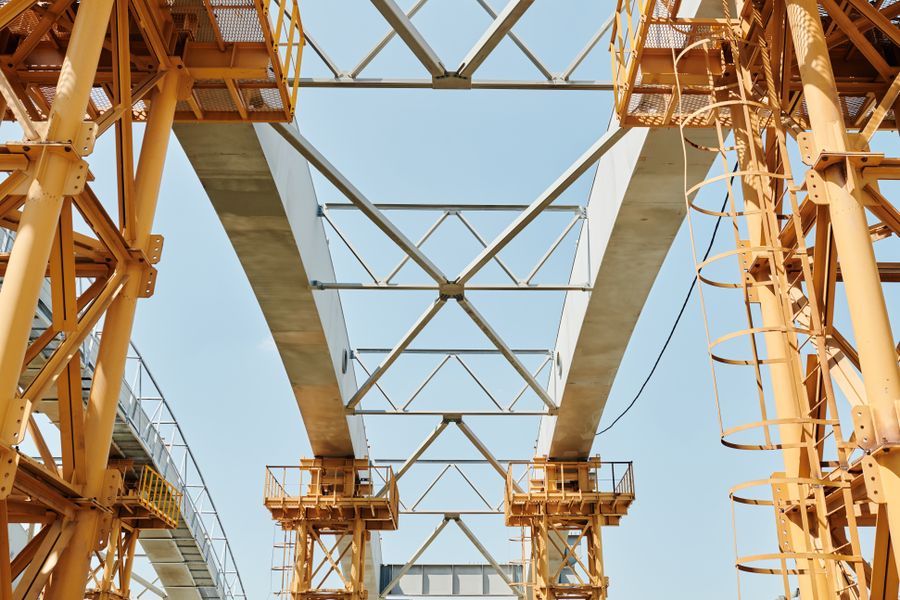
The car guide rails form the guided path for the complete car assembly.
Their design relationship includes the car frame, guide shoes or rollers, safety gear where applicable, car mass, rated load, suspension system, load distribution, and hoistway supports. The rails are therefore connected to the same structural decisions addressed in the Car Frames & Counterweights page.
A passenger elevator may place strong emphasis on ride behavior, alignment, low vibration, and smooth guide interaction. A freight elevator may add demanding load distributions, large car dimensions, impact, or handling equipment. A medical elevator may use a long or differently proportioned car. A high-speed elevator raises the importance of the complete dynamic and alignment system.
The buyer should not select a car rail by load or speed from an isolated table unless that table belongs to the actual elevator design basis. Final rail calculation, profile, support arrangement, and safety compatibility should be tied to the approved mechanical system.

Counterweight rails guide the counterweight frame throughout its travel.
The decision depends on counterweight mass, frame dimensions, guide arrangement, suspension, buffers, clearances, counterweight position in the hoistway, and the complete traction design. A constrained shaft can make counterweight rail location as important as car rail location because both systems compete for physical space with doors, brackets, suspension means, wiring, and other equipment.
In modernization, a new car or changed car mass can affect the overall counterweight and traction design. That does not automatically mean the counterweight rails must change, but the retained rail system should be reviewed against the new frame, guide interfaces, clearances, and approved counterweight arrangement.
A buyer asking for counterweight rails should provide more than a rail photograph. Existing drawings, rail profile, frame information, guide-shoe type, bracket arrangement, rail spacing, and counterweight dimensions are much more useful.
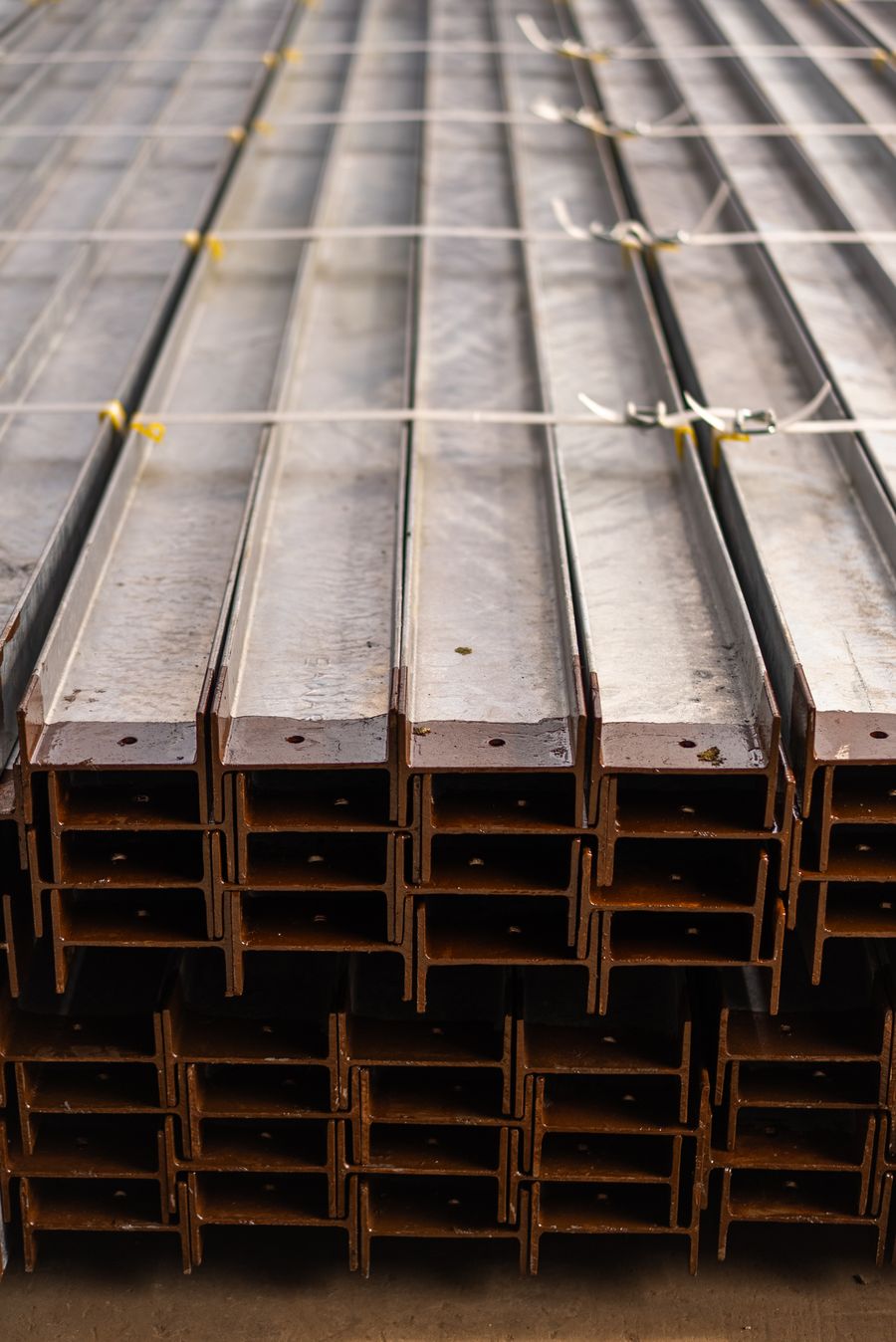
JAFITA’s strongest supplier evidence is in freight elevators. Company materials identify freight elevator production as a core manufacturing strength and present a High-strength Structure as a freight-elevator product theme. The current product scope also includes Industrial Elevator and Car Elevator.
That background matters because freight loading can influence the car frame and guide system in ways that a simple passenger-capacity comparison does not capture.
A palletized load may be distributed relatively evenly. A machine on four feet can create concentrated reactions. A pallet truck or forklift can introduce wheel loads and entry forces. A vehicle adds axle distribution and can shift its load position as it enters and leaves the car. An offset load can create different guide reactions from a centered load of the same total mass.
The rails themselves should not be presented as carrying the floor load directly; the load travels through the car platform and frame into the complete guided system. The important procurement point is that guide-rail calculation and support must reflect the approved frame and operating case.
JAFITA’s current freight documentation does not publish guide-rail profiles, rail calculations, bracket spacing, material grades, allowable loads, or freight-specific guide data. Those values require actual project engineering documents.
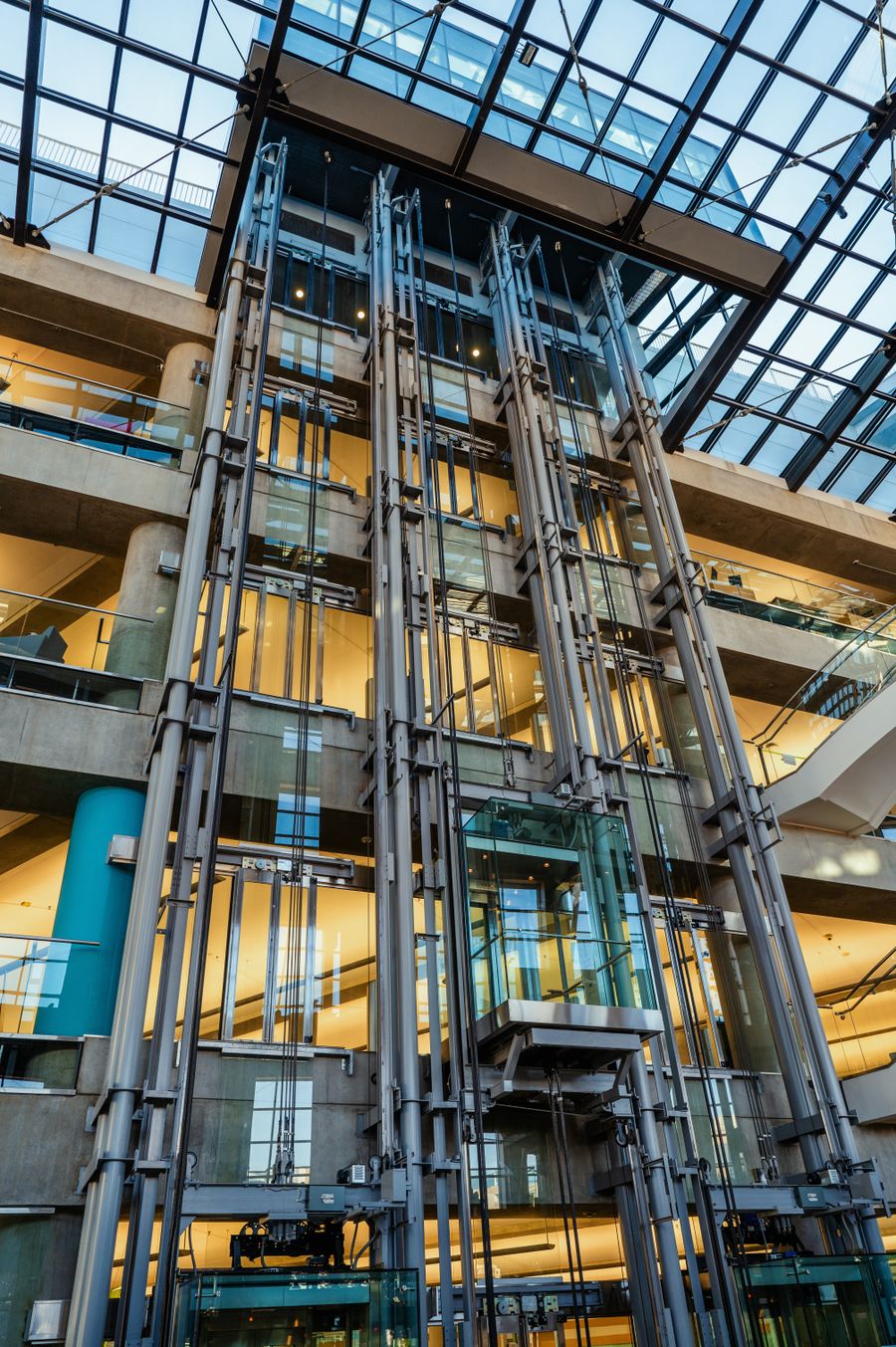
For passenger elevators, guide rails affect more than structural guidance.
Rail alignment, joints, guide-shoe or roller condition, frame geometry, load balance, suspension behavior, car mass, and installation quality all contribute to how the car moves through the shaft. Noise or vibration attributed to the rail may actually originate from a misaligned bracket, worn guide interface, frame issue, wheel or roller condition, suspension behavior, or another part of the system.
As speed increases, the guide path becomes increasingly sensitive to installation quality and dynamic interaction. JAFITA’s brochure presents Passenger Elevator and High-Speed Elevator categories, but it does not publish a specific high-speed rail model, rail section, alignment tolerance, guide-roller range, or ride-quality acceptance criterion.
For a high-speed project, the rail system should remain part of the approved complete-elevator mechanical design. A buyer should compare the complete guide-system proposal and installation requirements rather than a rail profile in isolation.
JAFITA’s current brochure also presents Medical Elevator and Observation Elevator categories.
A medical car may have different proportions, doors, mass distribution, and operating requirements from a standard passenger cabin. An observation car may add glazing, architectural structure, and different car mass. These changes can affect the car-frame and guide-system design even if the rated load appears similar.
The current supplier documents do not publish dedicated medical- or observation-elevator guide-rail ranges. The correct rail system must therefore be tied to the approved car mass, frame geometry, guide arrangement, safety system, travel, speed, and hoistway.
This distinction is important for procurement: the product category supports JAFITA’s project scope, but it does not create a supplier-specific numeric rail specification where none has been documented.
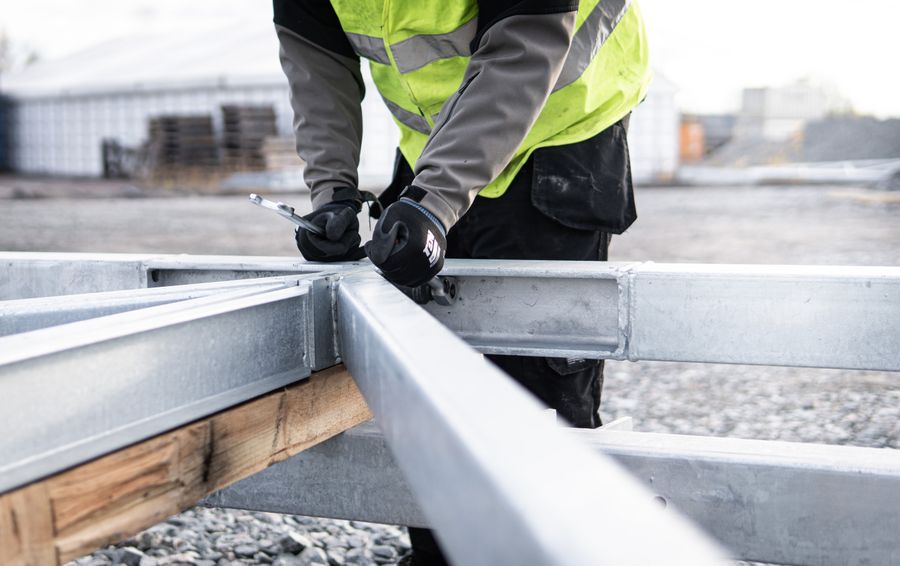
Guide rails are normally installed in sections rather than as one continuous piece over the full travel.
The joint between sections must preserve the guide path. A joint plate or fishplate arrangement, mating surfaces, hole pattern, fasteners, alignment, and working-surface continuity all matter. Poorly aligned joints can create impact at the guide shoe or roller, increase noise and wear, and make installation correction more difficult.
For replacement work, do not assume that a new rail section can be inserted into an existing run simply because the section appears similar. Confirm the rail profile, joint geometry, hole pattern, working-surface dimensions, machining condition, and existing accessory arrangement.
If the original rail identification is unclear, measure the complete section and photograph the end, working faces, joint, holes, markings, brackets, and guide interface before the damaged section is removed.
Final joint quality and alignment remain installation responsibilities that should follow the approved product and project documentation.
Brackets and clips are not generic hardware.
The rail is supported from the hoistway structure through the bracket and fastening arrangement. The correct design depends on rail forces, support spacing, building material, embedded or mechanical fixing method, bracket geometry, adjustability, installation tolerances, and the approved elevator calculation.
A bracket that physically reaches the wall is not automatically suitable.
Existing-building projects need particular care because wall surfaces can hide structural differences, prior repairs, unusual beam locations, or limited fixing zones. If existing brackets are intended to remain during modernization, record their dimensions, condition, fixing method, spacing, adjustability, and relationship with the rail.
The current JAFITA supplier materials do not publish standard guide-rail bracket models, clip models, fastener types, support spacing, or structural fixing details. These accessories should therefore be specified from the actual elevator and building interface.
Guide shoes or roller guides are the moving interface between the car or counterweight frame and the guide rails.
They should be reviewed together with rail profile, working-surface dimensions, frame mounting, running clearance or preload where applicable, lubrication concept, travel, speed, load, and maintenance condition. A rail replacement that changes the guide interface may also require changes to the guide shoe or roller assembly.
For modernization, keep the question simple: what remains, and what changes?
If the existing rails remain, the new guide assembly must match them. If the guide assembly remains, the replacement rail must match the working interface and the approved safety arrangement. If both change, the project should be treated as a coordinated guide-system modernization rather than two independent part substitutions.
JAFITA’s current materials do not publish guide-shoe or roller-guide model ranges, so model-specific compatibility should only be stated when actual component data is available.
Retaining existing rails can reduce the scope of a modernization project, but only when the rails remain technically suitable.
The survey should identify:
The decision is not simply “old rail versus new rail.” It is whether the retained guide path remains compatible with the new or retained car frame, safety gear, guides, counterweight, speed, load, and applicable project requirements.
If the rail profile is obsolete, damaged, excessively worn, incompatible with new safety equipment, or difficult to integrate with the proposed frame, a broader replacement may be more practical than attempting to preserve every existing interface.
| Capability | Supplier evidence |
|---|---|
| Freight manufacturing foundation | JAFITA identifies freight elevator production as a core manufacturing strength. |
| Freight structural context | Current freight-elevator materials present a High-strength Structure as a product theme. |
| Industrial elevator direction | Industrial Elevator is presented in JAFITA’s current freight-related product range. |
| Vehicle elevator direction | Car Elevator is presented in the current freight-related product range. |
| Passenger project scope | Current brochure presents Passenger Elevator and High-Speed Elevator categories. |
| Special passenger categories | Observation Elevator and Medical Elevator are presented in the passenger range. |
| OEM background | Company materials state that JAFITA has provided OEM services for multiple elevator brands. |
| Named OEM history | Uploaded company introduction names KONE and ThyssenKrupp in JAFITA’s long-term OEM history. |
| Factory-resource network | Company materials describe direct factory relationships developed through long-term cooperation, including Hitachi and XIO LIFT. |
| International business | JAFITA has been engaged in elevator export business since 2008. |
| Engineering support | Company brochure presents an Engineering Service Team. |
| Lifecycle support | Company brochure presents lifecycle service support. |
| Company qualifications | Company portfolio presents a Special Equipment Production License and ISO 9001, ISO 14001, and ISO 45001 management-system certifications. |
The current supplier materials do not publish a standalone JAFITA guide-rail catalogue, rail profile list, rail dimensions, material grades, machining grades, straightness tolerances, rail lengths, guide-rail calculations, bracket models, clip models, fishplate specifications, guide-shoe models, roller-guide models, or fixed support spacing.
This is important for buyer evaluation. JAFITA has documented elevator-manufacturing, OEM, project-coordination, engineering-support, and export experience, but guide-rail model claims must remain tied to actual supplier or project documentation.
For a new elevator project, provide:
For replacement or modernization, provide:
If only one damaged section is being replaced, also document the adjacent rail sections and existing joint geometry. A short replacement piece is only useful when it can become part of the same approved guide path.
For repeat orders, the rail profile alone is not enough.
The project record should preserve the exact rail identification, working dimensions, joint arrangement, accessories, brackets, clips, guide interface, safety-gear relationship, car or counterweight application, drawing revision, and product source. If the elevator is supplied through a coordinated multi-brand route, the approved supply source should remain part of that record.
JAFITA’s documented business model is relevant here. Freight elevator production is its clearest manufacturing foundation, and the company states long-term OEM cooperation with multiple brands, including KONE and ThyssenKrupp. It also describes broader direct factory relationships including Hitachi and XIO LIFT. The brochure presents an Engineering Service Team, lifecycle service support, and export business active since 2008.
Those facts support technical coordination and repeat-order traceability. They do not prove that JAFITA manufactures every guide rail, bracket, clip, fishplate, or guide shoe in-house, or that every component category is stocked as a standard item.
For a professional buyer, the useful question is therefore not “Do you sell elevator guide rails?” It is “Can the supplied rail and accessories be traced to the exact approved elevator configuration and interface?” That is the standard this page should support.
Price can change with rail profile, dimensions, length, machining and finish requirements, quantity, joint accessories, brackets, clips, packaging, project destination, and shipping scope. For replacement work, exact identification and compatibility should be confirmed before price comparisons are treated as equivalent.
The current JAFITA materials do not publish one universal guide-rail MOQ. Rail type, quantity, accessory scope, manufacturing or sourcing route, packing length, and shipping arrangement can change the commercial structure.
No fixed guide-rail lead time is published. The schedule depends on exact rail identification, quantity, accessory requirements, technical confirmation, supply route, packaging, destination, and shipping method.
A photograph helps with initial identification but is not sufficient. Provide the complete cross-section dimensions, rail markings, working surfaces, joint details, hole pattern, length, existing brackets, guide shoes or rollers, elevator model, and application.
Some elevator designs may use the same or different rail profiles, but this cannot be assumed. The car and counterweight rail systems must be selected from the approved elevator design and their respective guided masses, safety arrangements, frames, and calculations.
Possibly. Their profile, condition, alignment, wear, brackets, guide interface, safety-gear compatibility, and relationship with the proposed car frame or counterweight need to be evaluated before retention is approved.
Not by itself. Car mass, load distribution, speed, travel, frame geometry, guide arrangement, safety system, support spacing, building conditions, and the applicable engineering calculation all affect the guide-rail requirement.
Do not assume so. Bracket geometry, adjustment range, rail position, clip interface, support spacing, building fixing, and structural duty must match the actual installation.
ISO 8100-2:2026 includes calculation of guide rails within its scope for passenger and goods-passenger lifts covered by the standard. The destination jurisdiction and complete elevator design still determine the final requirement.
ASME A17.1/CSA B44 is a principal safety-code framework for elevators and escalators in North America, subject to adoption by the relevant jurisdiction. The code addresses car and counterweight guide rails, supports, and fastenings within the complete elevator safety framework.
Not in the current supplier materials. Do not treat an industry-common rail size or bracket-spacing rule as a JAFITA product specification. Model-specific data should be added only from actual JAFITA or approved supplier technical documents.
JAFITA’s brochure presents an Engineering Service Team and lifecycle support, but it does not establish one universal installation commitment for every component order. Rail installation, alignment, bracket fixing, guide adjustment, safety-device work, commissioning, testing, and local inspection responsibilities should be defined for the project.
This page supports procurement and project definition for elevator car and counterweight guide rails, rail joints, brackets, clips, fasteners, and related interfaces. It does not create a universal JAFITA rail range or approve a rail from its visible shape alone.
Guide rails are part of a complete mechanical and safety system. They interact with the car frame, counterweight frame, guide shoes or rollers, safety gear, buffers, suspension, hoistway supports, car mass, load, speed, travel, and building structure. Changes to one part of that system can move the requirement for the others.
ISO 8100-2:2026 includes guide-rail calculation and verification of safety gears within its scope. North American projects commonly use ASME A17.1/CSA B44 and the requirements adopted by the local authority. Special conditions such as seismic design, hazardous environments, severe corrosion, unusual industrial loading, extreme travel, high-speed duty, or existing-building constraints require project-specific review.
Local structural design, rail installation, alignment, fastening, inspection, testing, and acceptance remain the responsibility of the parties assigned to those functions under the project and jurisdiction.
