
Center-Opening vs Telescopic Elevator Doors
Use the door comparison worksheet to check required clear opening, panel parking space and retained equipment interfaces.
Use this page to decide whether an elevator door system can match opening geometry, retained interfaces, operating duty, and protection requirements without forcing building rework.
Send Your Door System Requirements
A door problem often appears at site as a simple symptom: the opening is too small, panel travel conflicts with the shaft, the operator does not communicate with the controller, or retained landing equipment cannot work with the replacement package. The visible failure is at the entrance, but the cause was usually decided earlier.
Clear opening is the first trap. Buyers sometimes compare only nominal door width and ignore panel movement, return space, jambs, sill geometry, or the space required beside the opening. A wider opening can change the landing layout and hoistway envelope. On freight projects, an opening can still be unusable when the load cannot approach squarely.
The second failure is interface mismatch. A door operator is not an isolated motor. It has to coordinate with the car-door mechanism, landing-door equipment, locks, sensors, controller commands, position feedback, and operating sequence. A replacement operator that fits mechanically can still create repeated faults if the command logic, voltage, feedback, or door-locking arrangement does not match the retained elevator.
The third failure is duty mismatch. A door that works acceptably in a low-use residential lift may not be the right basis for a freight entrance exposed to repeated cycles, wide panels, trolley impact, dust, or loading delays. JAFITA’s freight-elevator materials specifically identify a Safety Door Operator and Door Light Curtain and record one-million-cycle operation verification for the freight door-operator context. That verification is useful qualification evidence, but it must not be converted into a universal guaranteed service life for every door system.
Door-system specifications fall into two groups: fields that determine the architecture and fields that verify the selected build.
The selection-driving fields come first.
Clear opening width and height define the usable entrance, but they do not define the complete door envelope. The project also needs the opening arrangement: center-opening, side-opening, telescopic, through-car, or another project-specific arrangement. Panel count and panel movement determine how much lateral space is required and how the opening fits within the car and landing geometry.
Car doors and landing doors perform different roles and have different interfaces. Car doors travel with the car; landing doors remain at each floor and must coordinate with car-door operation and locking. In modernization, retained landing doors must be checked against the new operator, controller, and coupling arrangement; door width alone cannot answer that question.
The operator and drive arrangement determine panel movement and communication with the elevator controller. Record the operator model, motor data, supply voltage, command interface, feedback or limits, and dedicated door-control electronics. If the controller is also replaced, define the door interface as part of the control-system design rather than field adaptation.
Protection and locking devices are also part of the system definition. Light curtains, safety edges or other detection devices affect closing behavior, while landing-door locking devices are part of the lift safety architecture. ISO 8100-2:2026 includes verification of door locking devices within its component-verification scope. North American projects commonly work within ASME A17.1/CSA B44, with electrical equipment addressed through the applicable A17 framework, including ASME A17.5/CSA B44.1.
Verification Fields: Verification fields come after the architecture is fixed. These include panel material and finish, hanger and roller details, sill dimensions, lock model, sensor model, operator identification, wiring, connectors, mounting dimensions, labels, and drawing revision. These fields are critical for replacement and repeat orders, but they should not be used to hide an unresolved opening or interface decision.
When comparing suppliers, check in this order: first the usable opening and panel geometry; second the operator, controller, lock, and protection interfaces; third the detailed component identification and finish. A door that passes the third check but fails the first two is still the wrong door system.
Door sizing begins with the largest recurring transport envelope, not with a preferred catalog width. For passenger elevators, that envelope is tied to user flow, accessibility, car geometry, and landing circulation. For freight elevators, include the actual pallet, cart, trolley, machine, vehicle, packaging frame, or handling equipment that must cross the sill.
Opening width should be checked together with approach geometry. A load that is narrower than the clear opening may still fail to enter if it must turn immediately before the landing door. Opening height should include the transport condition, not only the final installed height of machinery or equipment.
Panel arrangement changes the space required beside the opening. Center-opening doors split movement to both sides; side-opening and telescopic arrangements move the panel stack differently. The correct arrangement depends on available car and landing geometry, not a universal preference.
The number of entrances also changes the system. Front-and-rear doors can reduce reversing for goods movement, but they add landing openings, door equipment, control logic, and shaft interfaces.
Door mass, panel width, cycle frequency, hold-open time, environment, and the probability of impact all influence operating duty. Final sizing and component selection must therefore be confirmed for the actual project rather than taken from an industry-typical range.
Passenger projects often begin with a door-width target, but the buyer’s real decision is whether the complete entrance supports the expected passenger flow and fits the available shaft and landing.
Center-opening arrangements can support balanced passenger movement where the geometry permits. Side-opening arrangements may fit projects where available return space or car geometry favors movement to one side. The correct choice is not aesthetic; it changes panel travel, landing layout, and the relationship between car and hoistway dimensions.
Door timing also interacts with traffic performance. An elevator can have adequate rated speed while losing effective handling capacity through slow door operation, repeated reopening, or long dwell caused by poor entrance flow. That does not mean a buyer should chase the fastest possible door. Closing behavior must remain coordinated with detection devices, users, accessibility requirements, and the applicable code.
For a new passenger elevator, specify the door as part of the complete system. Avoid selecting the controller, operator, fixtures, and door hardware as unrelated preferred brands and assuming they will integrate without additional engineering.
Freight-door selection begins with what crosses the threshold.
Pallets, carts, machinery, pallet trucks, forklifts, and vehicles can require wide or tall entrances, but large clear opening is only one part of the decision. The sill, landing approach, car floor, panel movement, door structure, protection devices, and operating sequence all interact with the material-handling process.
JAFITA’s supplier evidence is strongest in this area. Freight elevator production is identified as a core manufacturing strength. The freight-elevator materials identify a Safety Door Operator and Door Light Curtain, and they record one-million-cycle operation verification associated with the safety door operator. These facts give buyers specific items to qualify for freight-door duty rather than relying on a generic statement about door quality.
The test context still matters. Ask which operator configuration was verified, what test method or operating conditions were used, and whether the proposed freight elevator uses the same applicable system. Do not interpret a cycle-verification record as a guaranteed service-life number for every project.
For loads handled by forklifts or vehicles, include the approach route and impact risk. A large entrance can still become the maintenance bottleneck if wheels, forks, carts, or pallets repeatedly strike the sill, jambs, or panels.
In a home elevator, door arrangement can determine whether the lift fits the residence at all.
The available footprint may be limited by walls, stairs, corridors, floor openings, or an existing shaft. Changing from one entrance direction to another can alter landing circulation and usable car space. Through-car or alternative opening arrangements may solve one floor while creating a conflict at another, so the complete set of landings should be reviewed together.
JAFITA’s Home Elevator presentation explicitly supports multiple door opening methods. That is a supplier-specific configuration capability, but the current materials do not publish numeric door-opening ranges, panel arrangements, or shaft requirements. The buyer should therefore provide floor plans, entrance directions, available dimensions, and intended users before treating one door arrangement as fixed.
Finish can be selected after fit and access are resolved. A visually attractive door does not recover space lost to the wrong panel movement or landing direction.
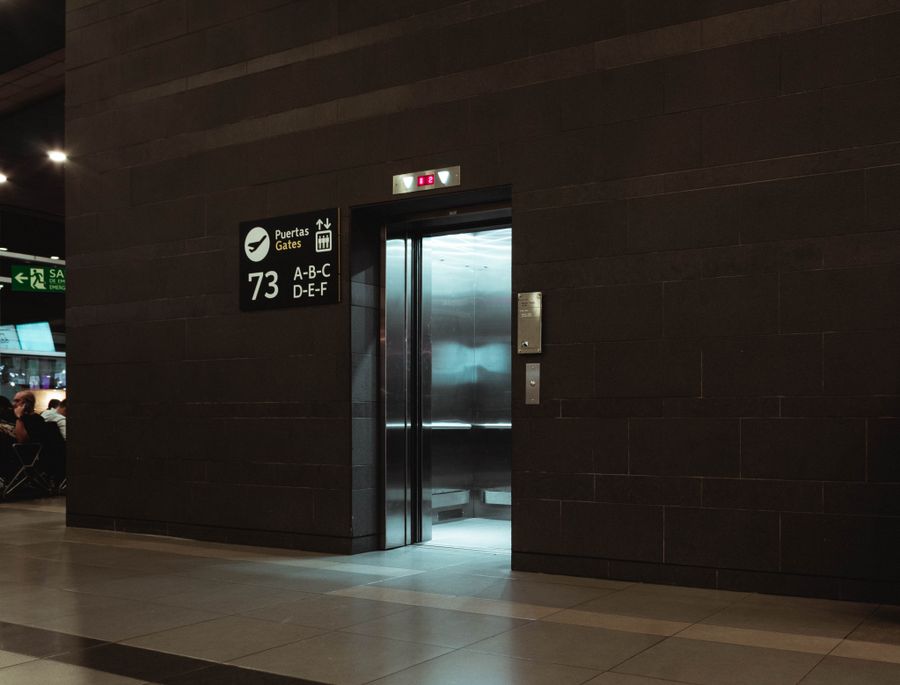
Front-and-rear entrances can reduce reversing and separate incoming from outgoing movement. They are especially useful where goods, service carts, beds, or other loads should pass through the car rather than turn inside it.
The decision driver is the complete route. Two entrances affect shaft construction, car layout, landing doors, door operators, controls, floor circulation, and available car wall area. A through-car layout should not be approved only because it looks efficient in the elevator plan. Check the approach and exit path at every served floor.
The door-control logic must also recognize which entrance is permitted to open at each landing. Where both entrances are retained or newly added, the operating concept should be defined before controller and door interfaces are frozen.
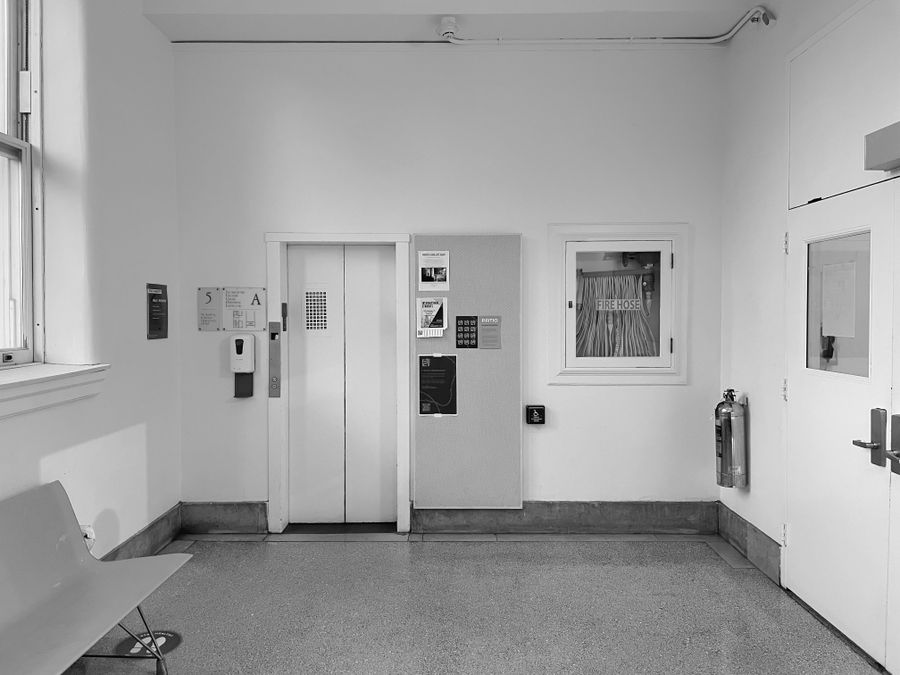
Modernization is where door-system mismatches become expensive because the new equipment has to coexist with retained hardware.
If landing doors remain, record their panel arrangement, clear opening, locks, hangers, rollers, sills, coupling geometry, and any existing interfaces with the car-door system. If the operator remains, record its motor, control board, supply, commands, feedback, sensors, and mechanical connection to the panels. If the controller changes, map the new door commands and safety-chain relationships before ordering hardware.
Replacing only the operator can become a larger modernization if the retained landing equipment, locks, sensors, or controller cannot support the new arrangement. The correct scope is the smallest technically coherent door system, not necessarily the smallest number of purchased parts.
For older elevators, original drawings and part numbers are more valuable than photographs alone. Visual similarity cannot establish whether a replacement operator or landing-door component will preserve the required mechanical and electrical interfaces.
| Capability | Supplier evidence |
|---|---|
| Freight manufacturing foundation | Freight elevator production is identified as a core JAFITA manufacturing strength. |
| Freight OEM background | Company materials state freight-elevator OEM cooperation with multiple brands. |
| Named OEM history | Uploaded company materials name KONE and ThyssenKrupp in JAFITA’s OEM history. |
| Freight door operator | Freight-elevator materials identify a Safety Door Operator. |
| Entrance detection | Freight-elevator materials identify a Door Light Curtain. |
| Door-cycle verification | Supplier documentation records one-million-cycle operation verification for the freight safety door operator context. |
| Home elevator door configuration | Home Elevator materials support multiple door opening methods. |
| Engineering support | Company brochure presents an Engineering Service Team. |
| Lifecycle support | Company brochure presents lifecycle service support. |
| International business | JAFITA has been engaged in elevator export business since 2008. |
The current supplier materials do not publish a standalone JAFITA door-system model range, clear-opening range, door-height range, panel-speed range, operator motor range, controller-interface list, lock model range, or universal door-cycle specification. Those values must be confirmed for the actual elevator or replacement requirement.
For a new project, send the elevator type, project country, number of entrances, clear opening required, door height, opening arrangement, car and hoistway drawings, and the load or user route that controls the entrance. For freight work, add the largest load envelope, handling equipment, approach geometry, operating frequency, and any known impact or environmental conditions. For a home elevator, add floor plans and entrance direction at each landing.
For modernization or replacement, identify the existing elevator first. Send the door-operator model, motor and control-board information, landing-door arrangement, lock information, sensors, voltage, connectors, mounting dimensions, original drawings, and photographs of the installed system. Mark which parts must remain and which parts may be replaced.
JAFITA’s documented freight manufacturing and OEM background, Engineering Service Team, lifecycle support, and multi-category supply model provide the company basis for technical coordination. The current materials do not establish one universal door package, so the enquiry should be tied to the actual elevator configuration before the component route is approved.
For JAFITA, the strongest auditable door-system evidence sits inside its freight-elevator manufacturing and OEM history. The supplier materials identify freight elevator production as a core manufacturing strength and specifically present a Safety Door Operator and Door Light Curtain. They also record one-million-cycle operation verification for the freight safety door operator. Those are concrete qualification points that a buyer can ask to see in the applicable product context.
The same company materials state long-term OEM cooperation, including KONE and ThyssenKrupp, and present an Engineering Service Team and lifecycle support. JAFITA has also been active in elevator export business since 2008. These facts support repeat project coordination and overseas supply discussions.
They do not establish that every door component is manufactured in one JAFITA facility, that every door operator receives the same cycle test, or that one verified operator configuration has a guaranteed one-million-cycle field life. The current supplier materials also do not publish door-component stocking levels, universal inspection records, fixed warranty terms, or a standalone door-model catalogue.
For repeat orders, preserve the approved door arrangement, clear opening, panel configuration, operator identification, locks, sensors, interfaces, drawings, and revision status. Configuration traceability is what allows the next order to be compared with the first one rather than being reconstructed from appearance.
Price can change with clear opening, door height, opening arrangement, panel count, entrance quantity, operator and control architecture, landing-door scope, finishes, protection devices, customization, quantity, destination, and shipping scope. Compare quotations only after the technical scope is aligned.
The current JAFITA materials do not publish one universal minimum order quantity for door systems or components. State the exact item, quantity, elevator model, and whether the requirement is replacement, modernization, or new construction.
No fixed door-system lead time is published. Exact model identification, drawings, interfaces, quantity, customization, supply route, destination, and shipping method can all move the schedule.
Start with the destination jurisdiction and selected elevator category. JAFITA’s company license and ISO management-system certificates support supplier qualification; they are not universal door-system product certificates, so the applicable product and code documentation must be confirmed separately.
No. Opening width does not define motor, voltage, commands, feedback, mechanical coupling, panel mass, mounting, locks, sensors, or retained landing equipment. Use the original model, electrical data, drawings, dimensions, and interface information before approving a substitute.
They may be retained if the mechanical condition, locking arrangement, car-door coupling, sensors, controller interface, and applicable safety requirements remain compatible. Treat retained landing equipment as part of the system review rather than assuming it can stay unchanged.
No. A light curtain is an entrance-detection device; it does not perform the same function as a landing-door locking device. The complete protection and locking arrangement must follow the selected elevator design and jurisdiction.
No. JAFITA’s freight documentation records one-million-cycle operation verification for the freight safety door operator context. A verification test and a guaranteed field service life are different claims; review the applicable test basis and warranty terms separately.
JAFITA’s brochure presents an Engineering Service Team and lifecycle service support, but it does not publish one universal installation scope for every door component. Drawings, programming, commissioning, site attendance, inspection support, and later service responsibilities should be defined in the actual contract.
No. Door cycles, panel mass, loading impacts, environment, operating hours, and the selected components change maintenance demand. Follow the equipment documentation and the maintenance requirements applicable to the installation.
This page covers elevator car doors, landing doors, operators, entrance detection, and their mechanical or electrical interfaces in new projects, modernization, and replacement work. It does not establish a universal JAFITA door model range or numeric opening, speed, power, cycle-life, or dimensional limits.
The project team must provide accurate shaft, landing, equipment, and retained-component information. Local designers, installers, maintainers, inspectors, and authorities remain responsible for work assigned to them under the project and jurisdiction. Fire-rated landing doors, accessibility, vandal resistance, hazardous environments, seismic conditions, and special evacuation functions require separate review where applicable.
Do not approve a replacement when the original interface cannot be identified. Safety-related door locks and electrical equipment may require product-specific verification or certification, and proprietary controllers or door networks can limit substitution. The correct system must fit both the entrance geometry and the complete elevator architecture.